
How cold should an ice bath actually be?
Six to eight degrees, two to three minutes, and why colder is not better. What the numbers mean and how to get through your first one.
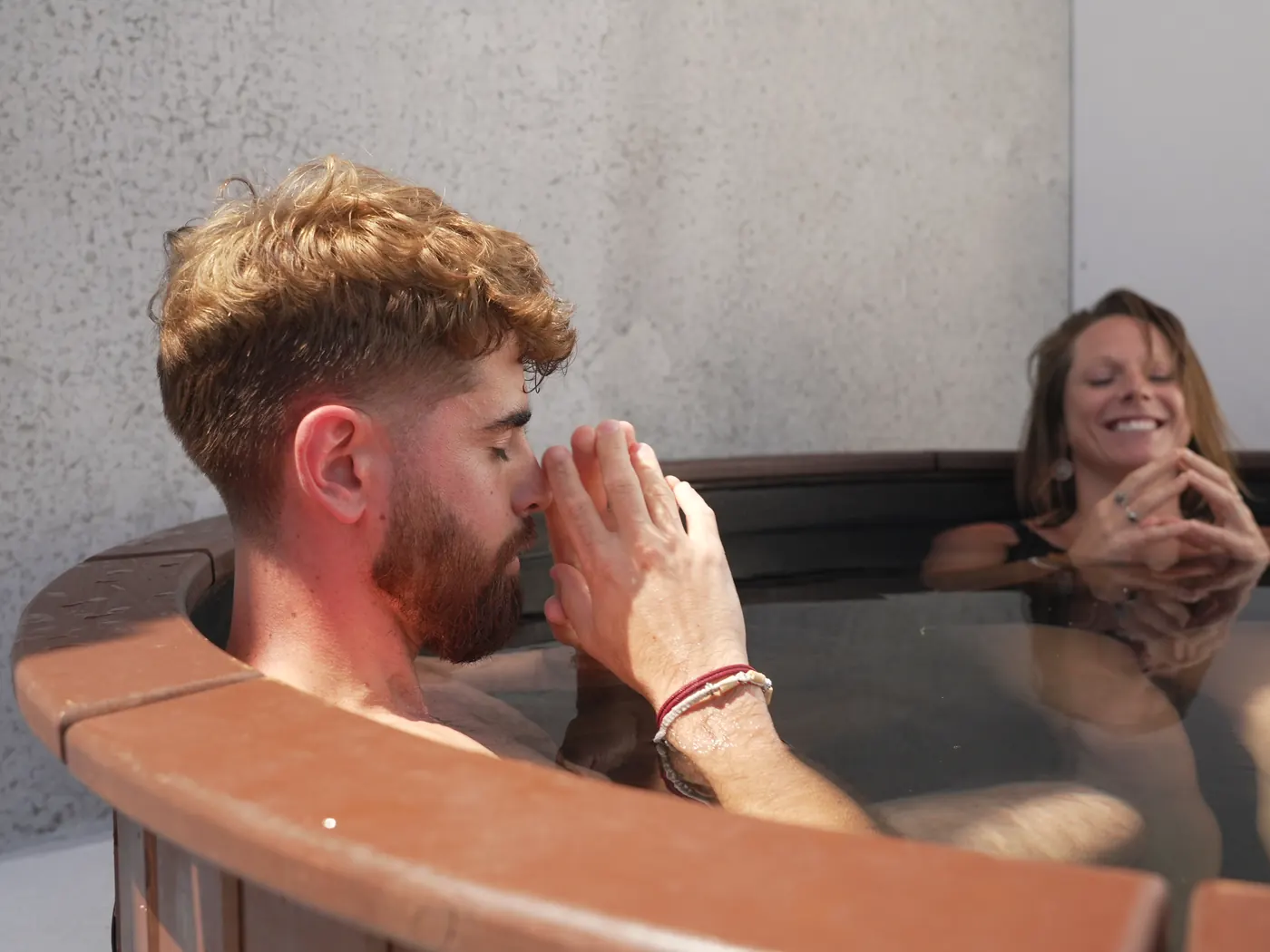
The internet has decided that colder is better, and it is wrong. The useful range for a cold plunge is roughly 6 to 15 degrees, and almost everything worth getting out of an ice bath happens in it.
Our plunges run at 6 to 8 degrees. Here is why that number, and what to do with your first two minutes.
What the temperature is for
Cold water narrows your blood vessels and triggers a sharp stress response: your breathing goes shallow and fast, your heart rate jumps, and everything in you wants to get out. Getting on top of that response is most of the skill.
Below about 10 degrees, the response is reliable. Going colder than that does not make it more effective, it just makes it harder to stay in long enough for the time to count. Two minutes at 8 degrees beats twenty seconds at 2 degrees, and it is a lot easier to repeat next week.
A plunge you dread is a plunge you stop booking. The temperature that works is the one you will get into again on Thursday.
How long to stay in
Two to three minutes is plenty at this temperature. Beyond that you are mostly proving something. If you are new to it, thirty seconds is a legitimate first go, and the second one will be easier than you expect.
If you are doing contrast therapy, you go back into the heat afterwards and repeat. How many rounds is up to you. Nobody here is counting or talking you into another one.
Getting through the first thirty seconds
- Get in deliberately. Not slowly, not by jumping. Sitting down in one movement is easier than lowering yourself an inch at a time.
- Breathe out longer than you breathe in. The gasp is automatic. A long exhale is the fastest way to get on top of it.
- Keep your hands out of the water at first. Hands and feet feel the cold hardest, and keeping them out for the first thirty seconds takes the edge off.
- Stay still. Moving stirs the water and brings a fresh cold layer against your skin.
- Do not hold your breath. If you are holding your breath, you are bracing rather than settling.
Ice baths at home versus a plunge that is maintained
A chest freezer or a bin of ice in the garage will get you to temperature. What it will not do is hold that temperature, filter the water, or be ready at 7am on a Tuesday without you doing anything.
The practical difference is consistency. Home setups get used hard for six weeks and then become storage. Whether that matters is a fair question to ask yourself before spending on one.
Who should not
Cold water is a real cardiovascular stress. If you have a heart condition, uncontrolled blood pressure, or you are pregnant, talk to your doctor first. Never plunge alone if you have any reason to think you might not manage the cold response well.
Where to try one in Auckland
At Renew in Parnell there are two options. The private rooms pair an infrared sauna with a cold plunge behind a closed door, 30 minutes for $75, and they fit two to three people. The rooftop has two saunas, an ice bath and a spa bath, up to nine people at a time, 60 minutes for $45.
Bring togs. Everything else is here.