
The benefits of contrast therapy
Alternating heat and cold: what it does to your circulation, what the research supports, and what a session in Parnell actually looks like.
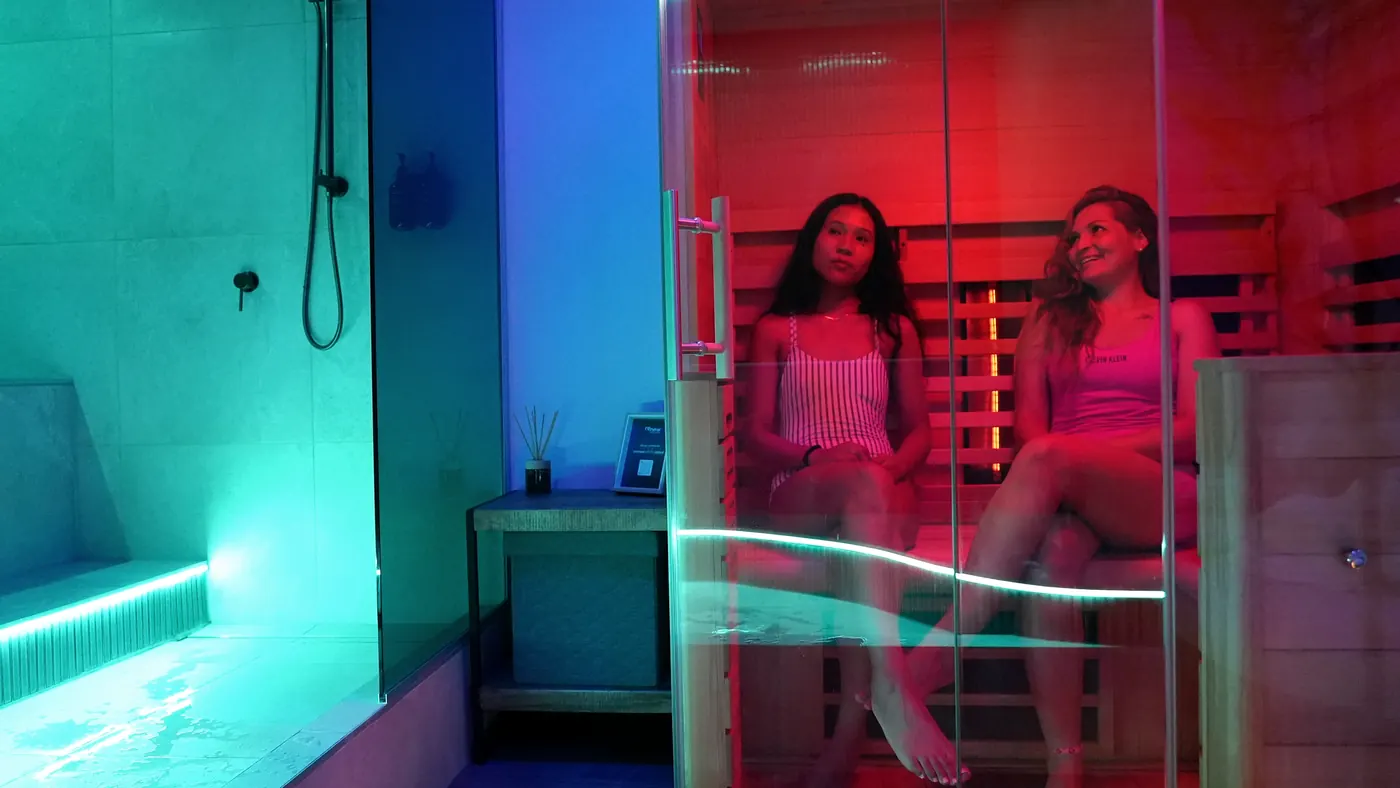
Contrast therapy is heat then cold, repeated. A sauna, then an ice bath, then back again. It is the oldest thing in the building and still the one people come back for, because it is the one you feel most plainly.
What the heat and the cold are doing
Heat widens your blood vessels. Cold narrows them. Alternating the two creates a pumping effect through your circulation that neither one on its own produces. That is the whole mechanism, and it is enough.
What you notice is more ordinary than the mechanism. Muscles let go in the heat. The cold is a sharp two or three minutes that you get better at. Afterwards there is a clear-headed, slightly buzzy feeling that most people describe as feeling switched on rather than wrung out.
What the research supports
A 2013 review pooling eighteen trials found that people who alternated hot and cold after hard exercise were less sore than people who simply rested, and that it held from a few hours afterwards out to three days.
The same review lined contrast therapy up against cold water alone, compression and stretching, and found they all landed in much the same place. So we are not going to tell you this is the best recovery method.
The best recovery method is the one you will keep doing. Most people do not look forward to stretching, and almost nobody books a stretching appointment for a Friday evening.
One more finding, because it surprises people: the drop in stress after a cold plunge does not show up straight away. In a 2025 review pooling eleven trials it turned up around twelve hours later, which is roughly the next morning.
What people actually notice
- Less soreness the next day. The most reliable one, and the one with the most research behind it.
- Looser joints and more range. Heat does most of this work.
- Sleep. Commonly reported, usually that night.
- A clear head. The cold does this, and it lasts longer than the session.
- Getting better at discomfort. The least measurable and, for a lot of people, the reason they come back.
A session in Parnell
There are two ways to do it here. The private rooms have their own infrared sauna and their own cold plunge, with the door shut. They fit two to three people, and bringing someone is $25. Thirty minutes, $75.
The rooftop has two saunas, an ice bath and a spa bath, up to nine people at a time, with the city in front of you. Sixty minutes, $45, and it is the cheapest thing we do.
Bring togs. Water and towels are here. The plunge runs at 6 to 8 degrees, which is cold enough to do the job and not so cold that your first session becomes an ordeal.
Who should check first
Cold water is a genuine cardiovascular stress. If you have a heart condition, uncontrolled blood pressure, or you are pregnant, talk to your doctor before booking. Nobody here will push you into the cold, and you set the pace and the number of rounds yourself.
If the ice bath is the part putting you off, the honest answer is that you do not have to get in it. The sauna on its own is still a good hour.