
The science behind red light therapy
Red and near infrared light, what it does in the body, and where the research is genuinely strong versus where the marketing has run ahead of it.
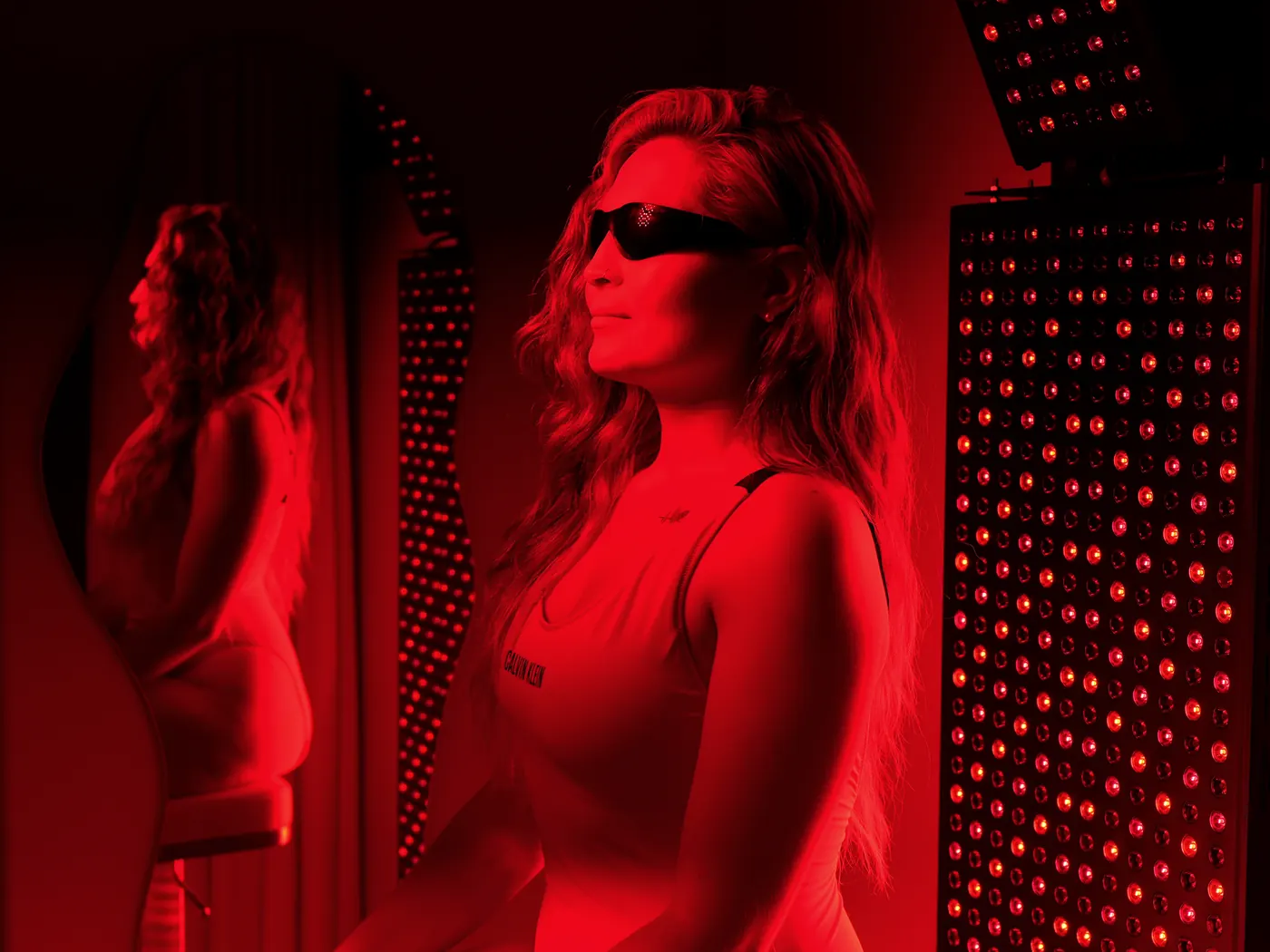
Red light therapy is one of those treatments that sounds like it was invented by a marketing department, and then turns out to have a real research base underneath it. Both things are true at once, which is what makes it worth explaining properly.
What it actually is
You sit or stand in front of panels that emit red and near infrared light. At Renew there are two of them, one either side of you, so the light reaches you from both directions rather than one. There is no ultraviolet in it, so it is not a sunbed and there is nothing to burn. You wear eye shields or keep your eyes shut, because the panels are bright enough that you would not want to look straight into them.
The light is warm at most. Nothing dramatic happens while you are in there. Twenty minutes later you get up and carry on with your day, which is a large part of why people fold it into a visit alongside something else.
The mechanism, once, in plain words
Light at these wavelengths is absorbed inside cells rather than bouncing off the surface of the skin. The working theory is that this gives cells more energy to do what they were already doing: skin cells producing collagen, muscle cells recovering after being worked. The proper name for it is photobiomodulation.
That is one sentence of mechanism, and it is all you need. A mechanism is not an outcome. Plenty of red light marketing lists thirty biological processes as if each one were a benefit you can feel.
Where the evidence is strongest
Facial skin. A 2023 randomised trial treated one side of the face in 137 women aged 40 to 65, across ten sessions in four weeks. The treated side finished with about a third less wrinkle volume around the eyes than the untreated side. Because each participant was her own control, it is a cleaner result than most wellness research manages.
Two things about that study are worth carrying with you. The first is the dose: ten sessions across four weeks, not one appointment. Red light rewards consistency more than any other therapy we offer. The second is what it did not find. The same trial measured skin hydration and elasticity and found no improvement in either, so the honest claim is about the volume of fine lines, not about skin generally.
Where it is promising but not settled
Muscle soreness and recovery after hard training. A 2025 review pooling fourteen studies found light applied after exercise reduced soreness three and four days later, and helped strength come back within a day or two. Ten of the fourteen studies found a positive effect and four found nothing.
The catch is delivery. Most of that research used lasers applied to a handful of specific points directly on the worked muscle. Standing between two panels is a different dose through a different route, so we would rather tell you the research exists than claim it is what a session here delivers.
Who books it
People who want it for their face, people who train hard and want something with no downtime attached, and people who like that it asks nothing of them. There is no heat, no cold, nothing to brace against and nothing to recover from, which makes it the easiest thing in the building to say yes to.
Before you book
It is not invasive and there is no UV, but keep your eyes covered or shut. If you take any medication that makes you more sensitive to light, or you have a history of skin cancer or an active skin lesion, check with your doctor first. Red light in pregnancy has not been properly studied, so avoid the abdomen and ask your doctor.
Red light therapy at Renew is 20 minutes for $40, and it is included in the Experience Pass and in three of the four combination packages.